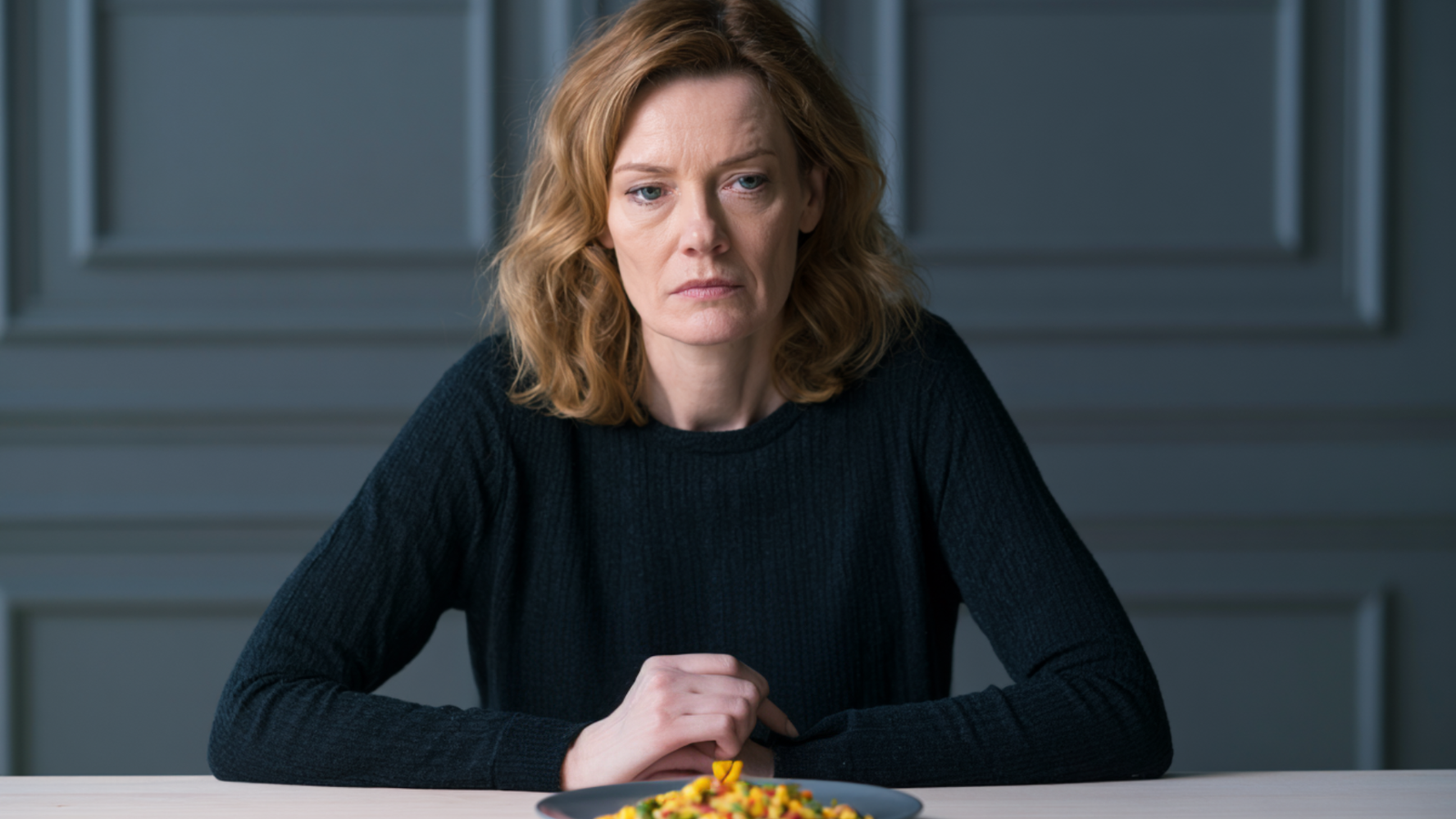
Close your eyes and picture someone with anorexia.
If you’re like most people, you pictured a teenage girl. That image is so culturally embedded that it shapes everything – how we talk about eating disorders, who gets screened for them, who feels entitled to ask for help, and who suffers in silence because they believe they’re too old for “a teenager’s problem.”
But eating disorders don’t check your birth certificate. Research consistently shows that anorexia and other eating disorders affect women in their forties, fifties, sixties and beyond – and the numbers appear to be rising, not falling.
This post is about closing the gap between the stereotype and the reality. Because that gap is where far too many women get lost.
The numbers tell a different story
When researchers have actually looked at women in midlife and beyond – rather than assuming eating disorders belong to adolescence — the findings are striking.
Studies suggest that among adults over forty, somewhere between two and nearly eight per cent of women meet the full diagnostic criteria for an eating disorder. And that’s just the tip of it. Around thirteen per cent of women over fifty report experiencing at least one current eating disorder symptom — and in one widely cited study, nearly three quarters of midlife women reported dissatisfaction with their weight, which is itself one of the strongest known risk factors for developing an eating disorder.
Read that again: nearly three quarters. Body dissatisfaction in midlife isn’t a fringe experience. It’s close to the norm – and disordered eating grows in exactly that soil.
Three doors into the same room
One of the most useful things the research offers is a way of understanding how anorexia shows up in midlife. It isn’t one story – it’s usually one of three.
The long thread. Some women have lived with an eating disorder since their teens or twenties and never fully recovered. The illness may have quietened for years – softened by busy decades of career, relationships, motherhood – but the underlying beliefs never left. In midlife, often under stress, the thread pulls taut again.
The relapse. Others genuinely recovered, sometimes decades ago, and believed that chapter was closed. Then something – a divorce, a bereavement, menopause, an illness – reopens it. Clinicians report that women with a history of disordered eating in adolescence are at the highest risk of relapse during the menopausal transition, when familiar feelings of body dissatisfaction and emotional upheaval resurface.
The late arrival. And some women develop anorexia for the very first time in midlife. Faced with ageing in a culture that equates youthfulness with worth, they begin building rituals around food, exercise and appearance that they never had before — and find themselves on a slope that steepens quickly.
Whichever door a woman comes through, the room is the same: an illness that is serious, isolating, and – crucially – treatable at any age.
Why midlife anorexia so often goes unseen
If eating disorders in older women are this common, why do we hear so little about them? A few reasons, and they compound each other.
Shame keeps women quiet. Many midlife women feel deep embarrassment about struggling with something they believe belongs to teenagers. That shame – I should have grown out of this; I’m a grown woman, a mother, a professional – is one of the biggest barriers to seeking help. There is a particular loneliness in feeling too old for your own illness.
Doctors aren’t looking. Medical professionals are far less likely to screen older patients for eating disorders. Weight loss in a woman in her fifties gets attributed to stress, menopause, or is even praised – where the same change in a sixteen-year-old might prompt concern. The research is blunt about this: lack of awareness and screening by medical professionals is a recognised obstacle to diagnosis in older adults.
Life is in the way. Midlife women are often carrying enormous loads – careers, teenagers, ageing parents, sometimes all three at once. When you’re the person everyone else leans on, prioritising your own treatment can feel impossible, or self-indulgent. It is neither.
The illness hides in plain sight. Diet culture gives disordered eating in midlife excellent camouflage. Restriction gets rebranded as “wellness”. Rigid food rules pass as discipline. A shrinking woman is congratulated. The culture applauds the very behaviours that are quietly doing harm.
Why it matters more, not less, with age
There’s a temptation to think that if a woman has “managed” for decades, the situation can’t be that urgent. The opposite is true.
Older bodies are less resilient to the physical toll of restriction. The cardiac, gastrointestinal, bone and dental consequences of anorexia tend to worsen with age, and women who have carried an eating disorder for many years often face more severe and enduring health complications. Researchers have also identified a consequence specific to this life stage: restrictive eating and weight loss in midlife are associated with faster cognitive decline – so much so that unexplained weight loss is now considered a potential red flag for identifying eating disorders in older adults.
There’s an emotional weight, too. Women who have lived with an eating disorder for decades often describe a painful awareness of everything the illness has already taken — years, relationships, joy. And for some, the disorder has become so entwined with identity that imagining life without it feels like losing a part of themselves. That entrenchment makes recovery harder to begin, but no less possible.
What noticing looks like
This isn’t a checklist for diagnosing yourself or anyone else – that’s the work of qualified professionals. But at a human level, it’s worth knowing the broad shape of what concern might look like in midlife: a relationship with food that’s becoming more rigid and rule-bound rather than more relaxed; growing anxiety around eating with others; a preoccupation with the changing midlife body that’s crowding out other parts of life; exercise that feels compulsory rather than chosen; or a quiet, escalating sense that food and weight are taking up far more mental space than they should.
If you recognise a friend, a sister, a colleague – or yourself – in that description, the single most important thing to know is this: eating disorders are treatable at every age, and recovery in midlife is not only possible but happens all the time. Some clinicians even observe that midlife can bring a depth of self-knowledge and readiness that makes recovery work more meaningful than it might have been at twenty.
You are not too old for help
If this post has stirred something in you, please don’t file it away as something to deal with later. Talk to your GP, and be direct – say the words “I’m worried I may have an eating disorder”, because naming it makes it harder to dismiss. If you don’t feel heard, ask again, or ask someone else. You are allowed to take up space in a system that wasn’t built with you in mind.
Support in the UK:
- Beat (the UK’s eating disorder charity): beateatingdisorders.org.uk – helplines, web chat and support groups for all ages
- Your GP can refer you to NHS eating disorder services, which treat adults of every age
You were never too young for your struggles to matter, and you will never be too old.
In the companion post to this one, I look at why midlife specifically — and menopause in particular – opens what researchers now call a “second window of vulnerability” for eating disorders, and what that means for how we care for ourselves through this transition.